

 |


|
|

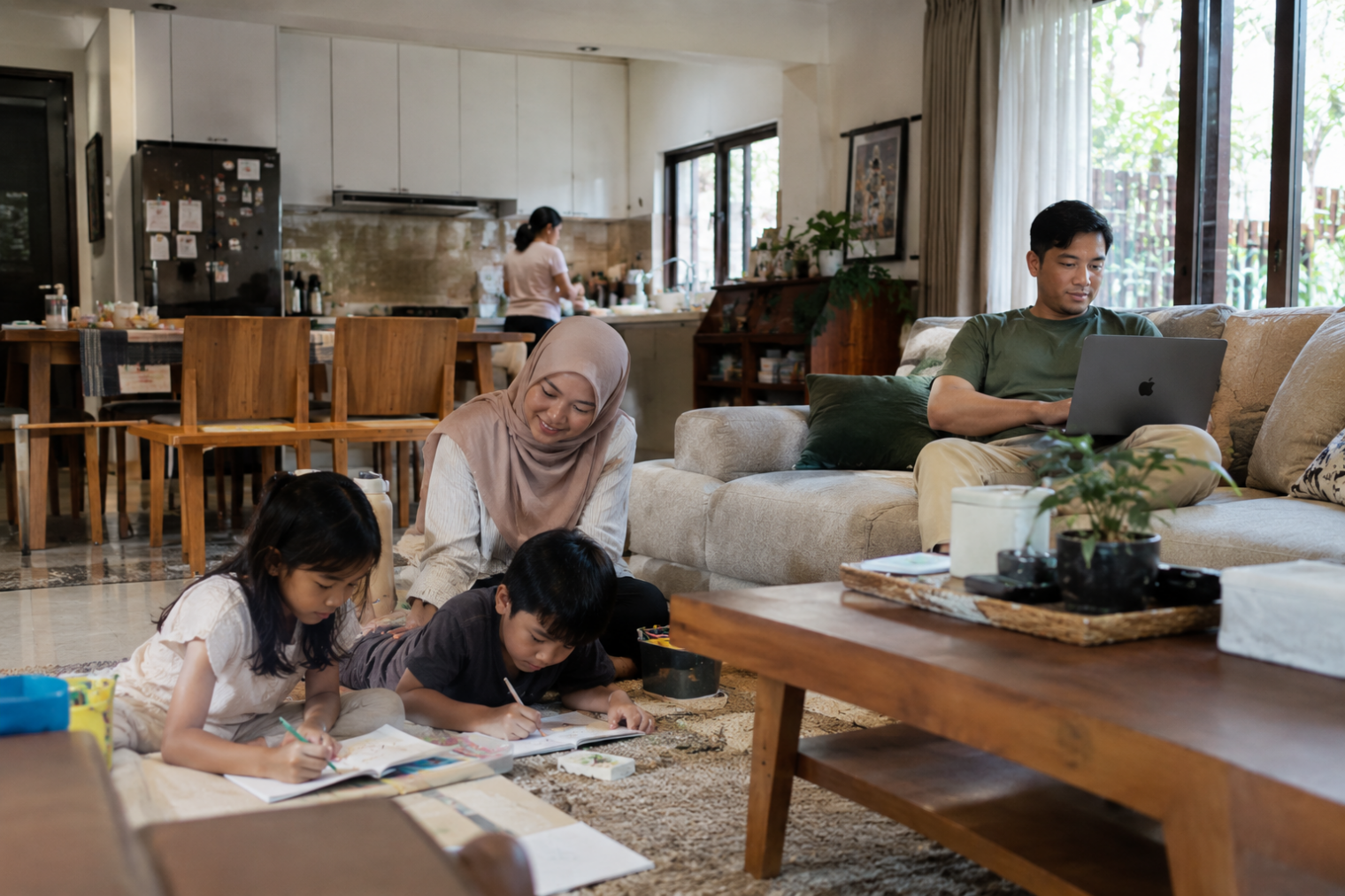
Have you ever wondered why some homes look beautiful in photos but somehow feel uncomfortable to live in?
On the other hand, there are homes that may not look particularly luxurious, yet somehow feel comfortable, practical, and perfectly suited to the people living in them.
The difference is often not about how expensive the materials are.
It is about whether the home is designed around the lives of its occupants.
Because, in the end, a home is more than just a building.
It is where we wake up in the morning, cook our meals, work, rest, welcome guests, raise our children, store our belongings, celebrate important moments, and sometimes even get through difficult periods in life.
That is why a good home should not only answer the question:
“How should this home look?”
It should also answer:
“How will this home be lived in?”
Life changes.
When you first get married, a home may only need to accommodate two people.
A few years later, you may have children.
Your children start walking, then go to school.
Your parents may eventually move in.
You may start working from home.
Your belongings increase.
And suddenly, the home that once felt spacious may feel much smaller.
This is why designing a home should not only focus on today's needs, but also consider how those needs might change in the future.
That does not mean you need to build the biggest house possible.
What matters more is creating a home that is flexible and adaptable.
Many people assume that a home capable of adapting to changing needs must have lots of rooms.
Not necessarily.
One room can serve several purposes.
A home office can become a guest bedroom.
A children's play area can eventually become a study space.
A dining table can also function as a workspace.
A child's bedroom can be designed with furniture that can adapt as they grow.
With thoughtful planning, the same space can serve different purposes at different stages of life.
It's not about constantly adding more space. It's about making better use of the space you already have.
A home for a young couple is naturally different from a home for a family with small children.
Once children become active and start exploring their surroundings, things that may have seemed unimportant suddenly matter.
Furniture corners.
The placement of electrical outlets.
Flooring materials.
Stairs.
Play areas.
Storage.
Even the distance between the kitchen and the children's play area.
A good home should not only look beautiful to adults.
It should also be safe and comfortable for the smallest members of the household.
A child who once needed a play area may eventually need a study desk.
Later, they may need more privacy.
Their storage needs will also increase.
That is why a child's bedroom should not be designed only around their current age.
Furniture that is too specific to one stage of childhood can quickly become impractical.
Flexible furniture and adaptable storage, on the other hand, can remain useful for much longer.
For example, an adjustable study desk or storage system that can serve different purposes as the child grows.
A good home gives its occupants room to grow.
This is another aspect that is often overlooked when a home is first designed.
When we are young, stairs may not seem like a problem.
A small bathroom may feel perfectly fine.
Slippery flooring may not seem like something worth worrying about.
But as we get older, our needs can change.
A good home should consider the possibility that its occupants may eventually have different mobility needs.
This can include:
easy and accessible circulation,
adequate lighting,
safer flooring,
comfortable bathrooms,
and spaces that are easy to move through.
These considerations are not only useful for older adults.
Ultimately, a home that is easier to navigate can make everyday life more comfortable for everyone.
There is one thing that almost always happens:
We accumulate things.
When we first move into a home, the closets may still be half empty.
A few years later, there are clothes, shoes, kitchen equipment, books, children's toys, documents, electronics, and countless other belongings.
Without proper planning, the home can gradually feel more and more crowded.
That is why storage is not simply a place to put things away.
Storage is part of the design of a home.
A good home should have practical places for the things its occupants actually use.
Not simply more and more cabinets.
Every family has different habits.
Some people cook every day.
Others rarely use the kitchen.
Some frequently entertain guests.
Others spend most of their time in their bedrooms.
Some work from home.
Others have specific hobbies that require dedicated space.
All of these things should influence the design.
A home should not be designed solely around what looks good on social media if it does not match the way you actually live.
For example, a large kitchen may look impressive.
But if the occupants rarely cook, that space might be more valuable when used for another purpose.
Good design is not about following every trend.
Good design is about understanding the people who will use the space.
Imagine a home where you constantly have to adapt to the layout.
Every time you cook, you have to walk across the house to get something.
Every time you work, you have to move furniture first.
Every time guests arrive, the living room has to be rearranged.
Every time the children play, the entire house becomes chaotic.
If these things happen repeatedly, perhaps the occupants are not the problem.
Maybe the home simply wasn't designed around the way they live.
A good home should make everyday activities easier, not more complicated.
The good news is that you don't have to create a home that solves every possible need for the next few decades from the very beginning.
What matters more is creating room for change.
For example, you can prepare utility routes for future upgrades.
Create spaces that can change functions.
Choose furniture that can be moved easily.
Design layouts that allow future modifications.
That way, when your needs change, you may not always need a major renovation.
The home can evolve together with its occupants.
Social media has made it incredibly easy to find home inspiration.
Minimalist homes.
Japandi.
Modern classic.
Industrial.
Modern tropical.
They can all look beautiful.
But there is something important to remember:
A home that looks great on camera may not necessarily be the right home for your life.
A photograph shows you how a home looks.
It doesn't show you how far you have to walk from the kitchen to the dining area.
It doesn't show you whether the storage is sufficient.
It doesn't tell you whether the house becomes unbearably hot in the afternoon.
It doesn't tell you whether the sofa is actually comfortable for everyday use.
And it certainly doesn't tell you whether the layout works for your family's habits.
So take inspiration from anywhere you like.
But ultimately, the decision should come back to one question:
“What do I and my family actually need?”
Perhaps this is the simplest way to think about a home.
When you are living alone, the home adapts to your needs.
When you get married, it adapts to two people.
When you have children, it changes again.
As your children grow, your spatial needs change once more.
When your parents move in, the home adapts again.
And as you enter different stages of life, your home should continue to provide comfort.
A good home is therefore not simply a home that looks beautiful when it is first completed.
A good home is a home that remains relevant as the lives of its occupants change.
Because people grow.
Needs change.
Habits evolve.
And a home should be able to grow with us.
A home is part of the journey of the people who live in it.
So when designing a home, don't only ask:
“What kind of house do I want?”
Also ask:
“What kind of life do I want to live in this home?”
That question can transform design from simply creating a beautiful space into creating a home that makes everyday life more comfortable, practical, and meaningful.
Because a good home is not one that forces us to adapt to it.
A good home is one that adapts to our lives.


 Back to News
